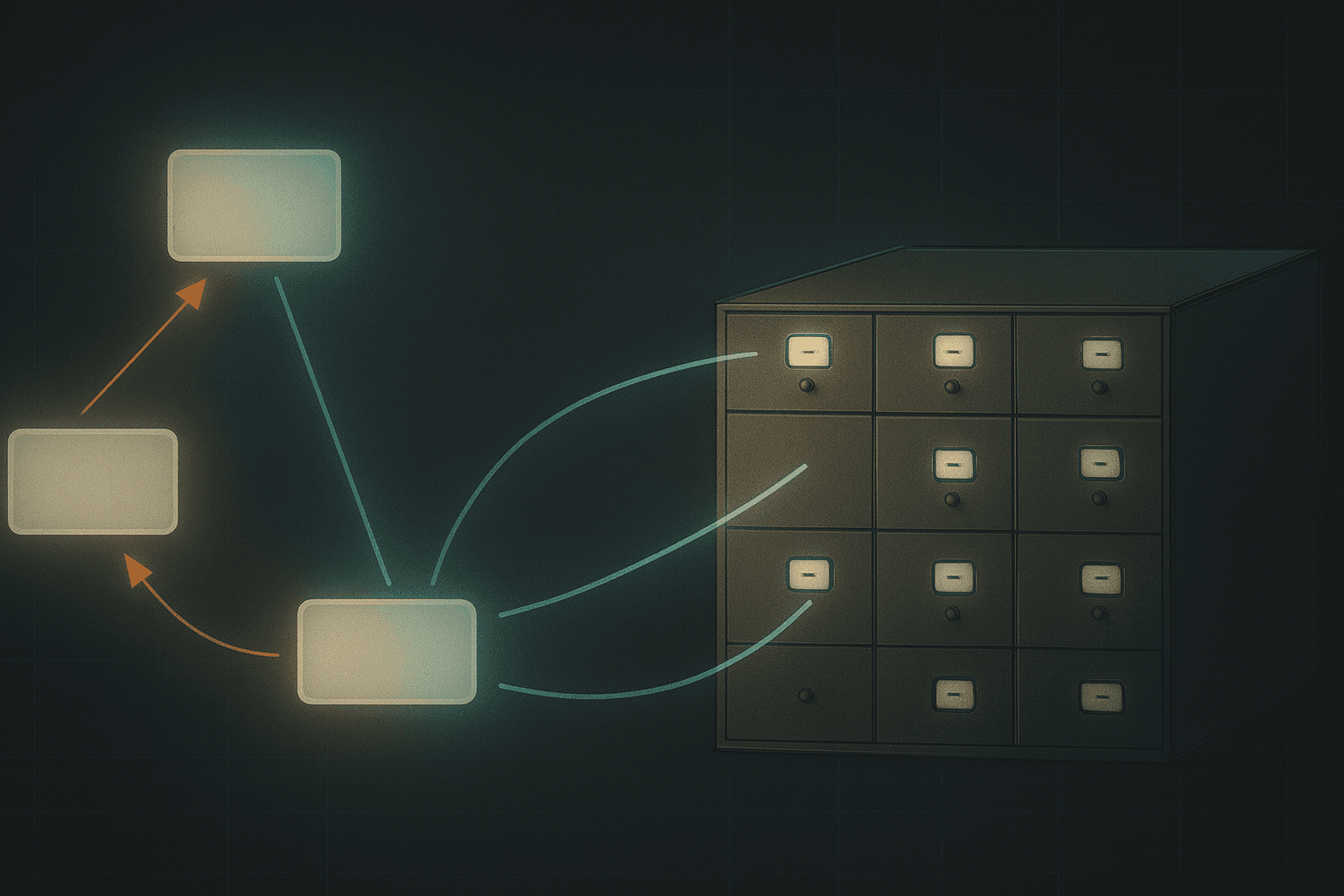
The story of Niklas Luhmann has been told countless times in productivity circles, but it's worth revisiting in our current moment.
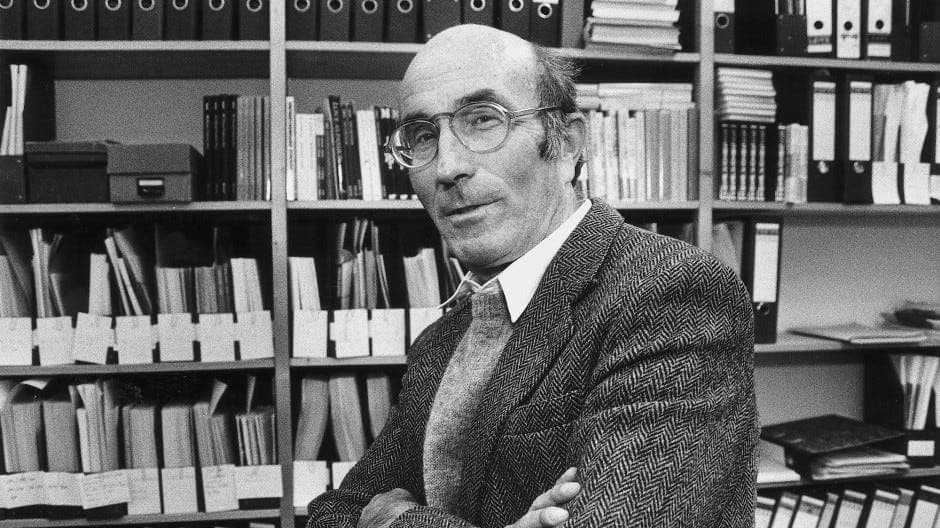
This German sociologist produced around fifty books and six hundred articles, plus numerous unfinished manuscripts—all using a manual Zettelkasten system of index cards. If you've read Sönke Ahrens' "How to Take Smart Notes" or explored any of the many Zettelkasten tutorials online, you know the basics. But what does this system mean in an age where AI can seemingly think for us?
The System
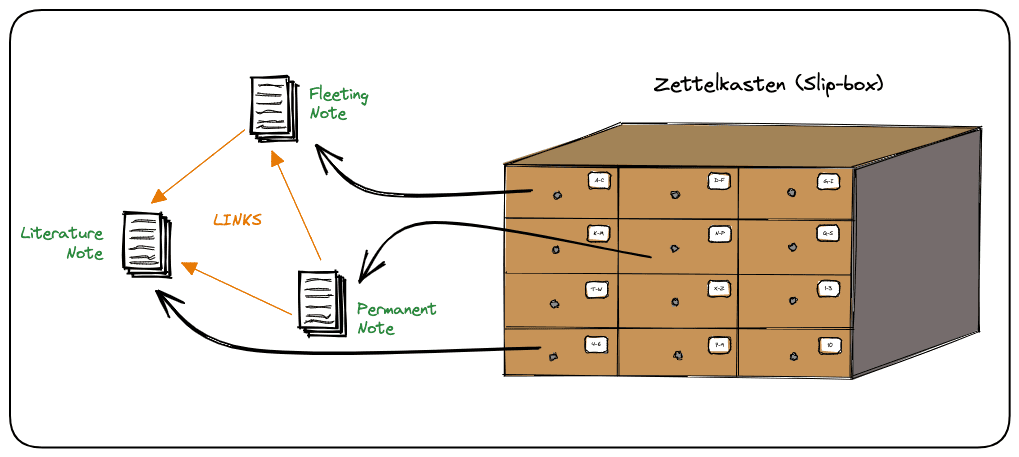
The Zettelkasten breaks down into three simple components:
- Fleeting Notes: Capturing passing ideas and thoughts
- Literature Notes: Atomic ideas extracted from sources, rewritten in your own words
- Permanent Notes: Polished, interconnected insights distilled from fleeting and literature notes
I'd really recommend reading the book "How to Take Smart Notes" - it's a weekend read. But if you don't have time, here's a video by Vicky Zhao I found this morning explaining the system:
The magic happens in the permanent notes, which follow three simple rules:
- One atomic note per idea (think building blocks)
- Each idea must be expressed clearly enough for a reader with no context
- Ideas should always connect to other ideas in your system
The Power of Compression, Abstraction and Modular Thinking
What makes Zettelkasten so powerful isn't the organization—it's the cognitive process it enforces. You're constantly compressing ideas to their essence, abstracting them into reusable pieces, then decompressing and recombining when needed. This mirrors how intelligence actually works: turning experience into models, then rebuilding those models into new understanding.
The result? Output becomes incredibly easy. When you need to write, speak, or think through a problem, you're not starting from scratch—you're assembling pre-formed building blocks of thought.
The Vendor Lock-in tension
Vendor lock-in happens when you become dependent on a specific company's platform or service, making it difficult or costly to switch to alternatives. Companies naturally build systems that encourage users to invest more deeply in their ecosystem—it's a sound business strategy that creates sustainable value for both parties.
AI can theoretically integrate into every step of the Zettelkasten process: organizing notes, managing connections, suggesting combinations. It could supercharge the entire system.
But there's a catch. Current AI interfaces are overwhelmingly chat-centric. Conversations happen, insights emerge, then... nothing gets baked back into your knowledge base. The incentive structure pushes users toward outsourcing their thinking through long chats rather than building modular, reusable abstractions.
This creates a dangerous dependency. When your thinking lives in someone else's system, you're subject to vendor lock-in, data loss, and the gradual atrophy of your own cognitive processes.
What's the alternative?
Tools like Obsidian have made digital Zettelkasten systems incredibly powerful. Users add plugins for AI integration—vector search, auto-linking, smart suggestions. Similar approaches work with Notion and other knowledge management tools.
These solutions let you build a knowledge base external to the AI, then use language models to interact with it. But here's the limitation: they're not AI-native. The AI is bolted on, not built in. The language model isn't aware of your knowledge base structure, doesn't help build it from the ground up, and can't seamlessly weave between your existing knowledge and new insights.
A Different Approach
This is exactly why we built Ra-h differently. Instead of treating AI as an add-on to traditional knowledge management, we started with the Zettelkasten principles and built the AI system around them. The model has contextual awareness of your knowledge base first, prioritizing the building and connection of atomic ideas over lengthy conversations that disappear into the ether.
Ra-h was inspired by Zettelkasten methodology, modular thinking, and atomic ideas—not as an afterthought, but as the foundational architecture. Every interaction is designed to either build your knowledge base or leverage what you've already built.
The models are trained with an understanding of Zettelkasten methodology, and to prioritise the growth and evolution of your knowledge-base.
In an age where it's tempting to let AI do our thinking for us, the Zettelkasten approach becomes more valuable, not less. The goal isn't to outsource cognition—it's to augment our natural ability to compress, abstract, and recombine ideas. That's how we maintain agency over our own intelligence while still benefiting from AI's capabilities.
Here's a video of me walking through how I use Ra-h to create this article: